A Closer Look
An interactive installation that investigates censorship and access to documents of the Epstein case.
Un'installazione interattiva che indaga la censura e l'accesso ai documenti del caso Epstein.
Concept
Following the release of documents regarding the Epstein case by the American Department of Justice, the entire world was caught by a wave of shock and disbelief. This project aims to focus on the theme of documents drafted in an apparently random way.
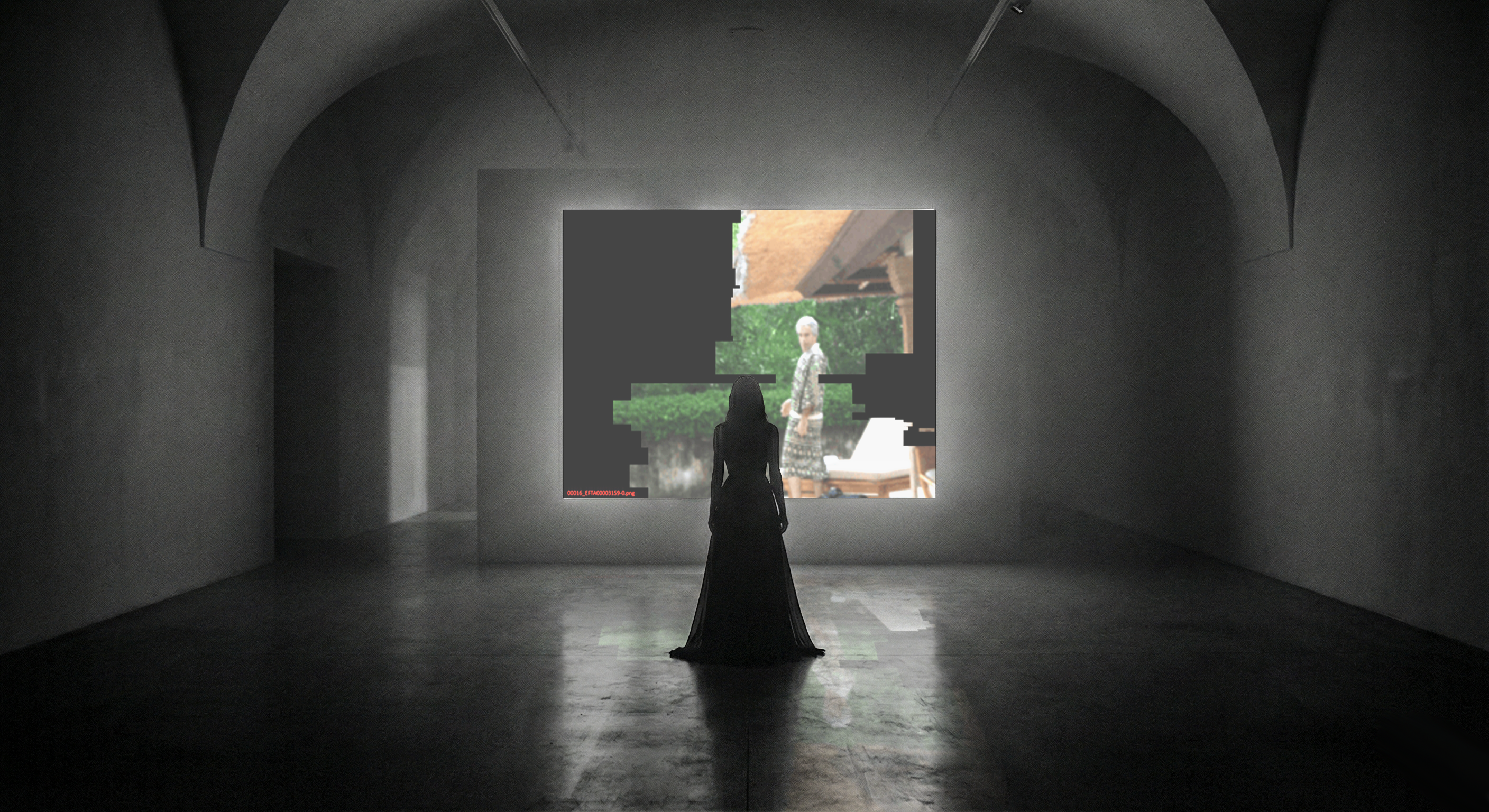
Maintaining the aesthetic but reversing the dynamics of censorship implemented by the American Department of Justice, A Closer Look invites the spectator to unveil portions of images coming from the Epstein files through interaction developed with a camera that records the spectator.
Structure
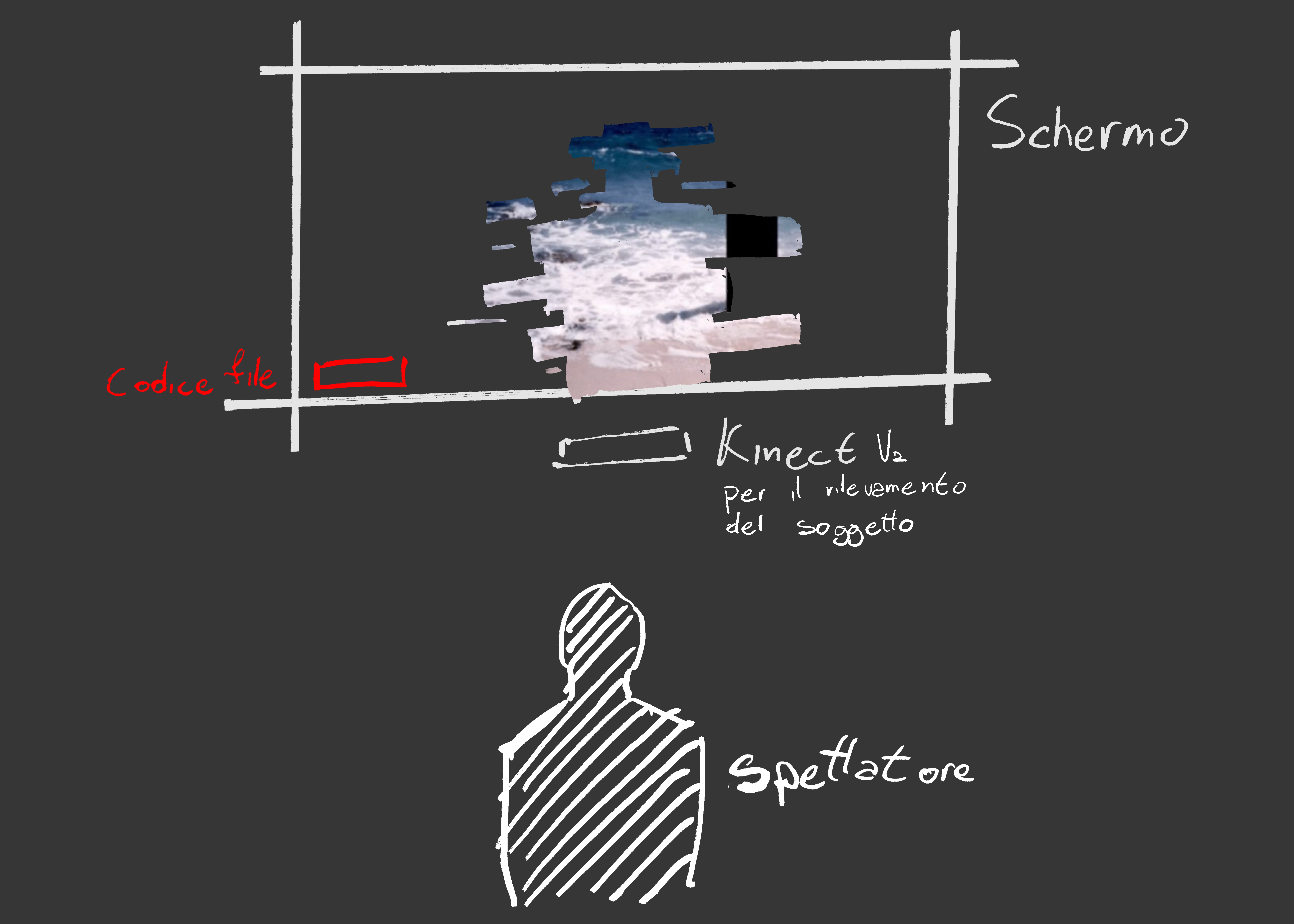
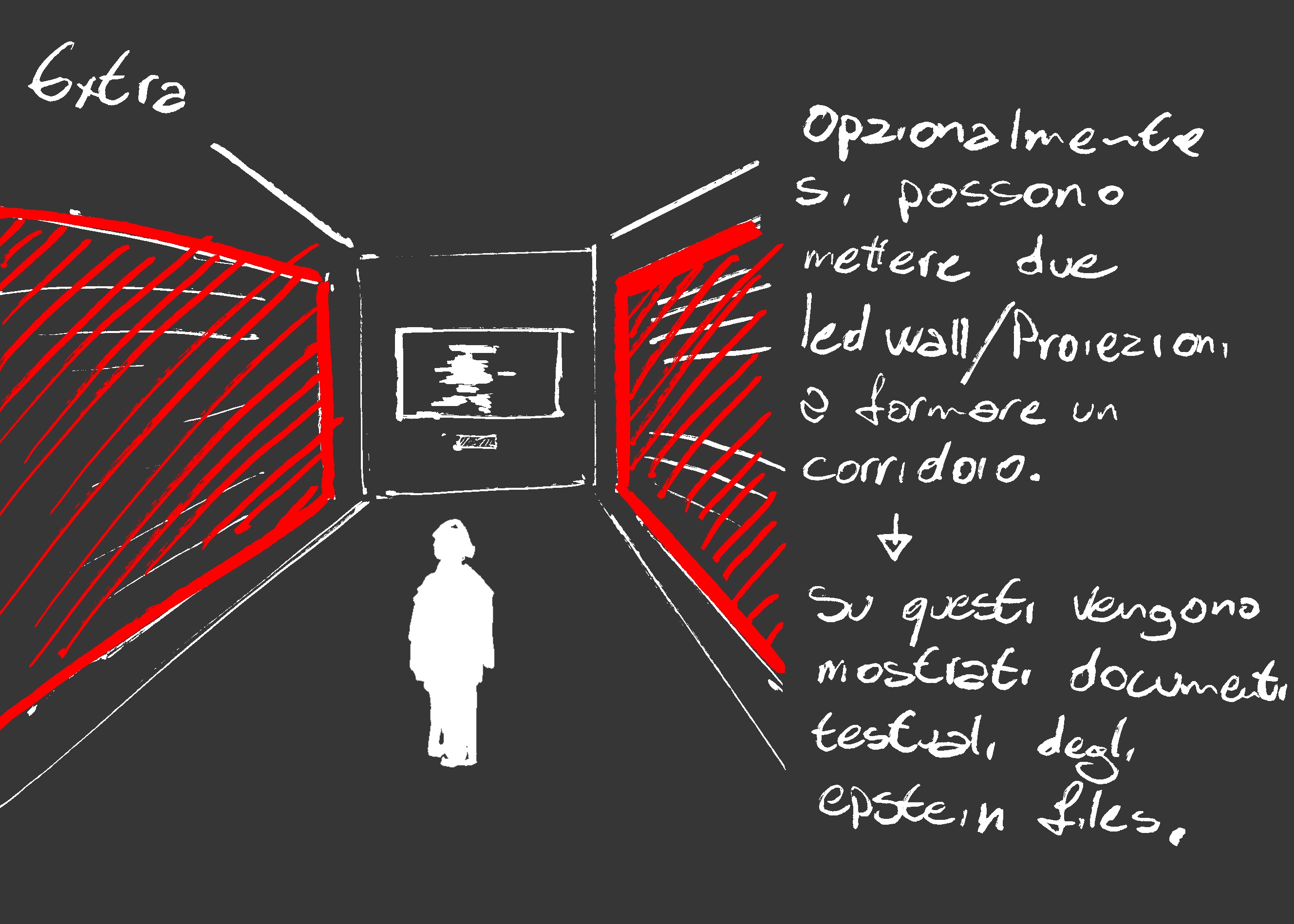
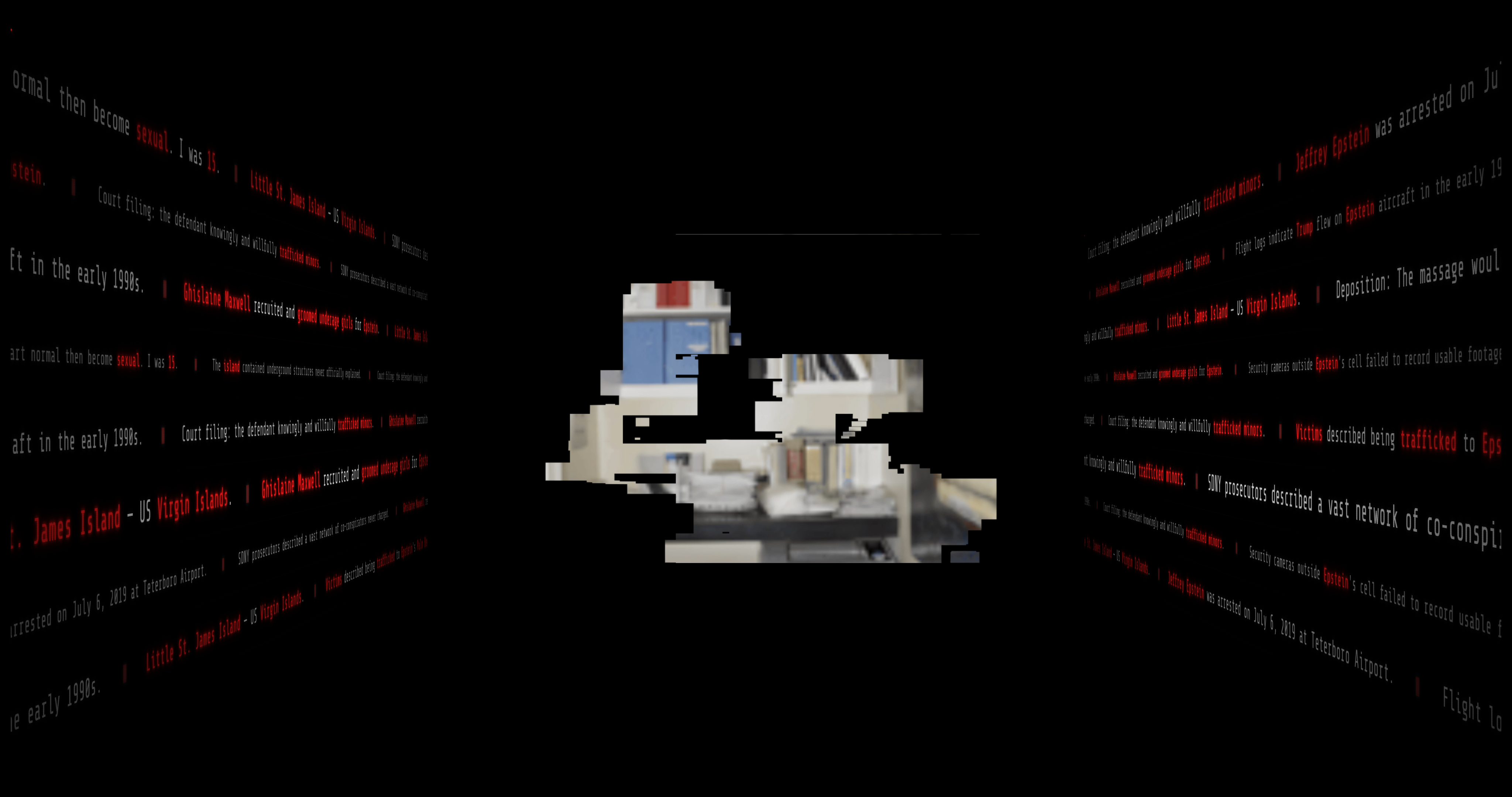
A screen displays a black image. As soon as a person approaches the screen, they are recorded by a camera and their silhouette is superimposed on the black image, revealing portions of an infinite series of images coming from the Epstein files database that alternate randomly in rapid succession.
For an aesthetic choice and to add an element of truthfulness, the images are accompanied by a caption indicating the file name.
The visual part is accompanied by a soundtrack composed of audio excerpts and testimonies coming from the Epstein files database.
Technology
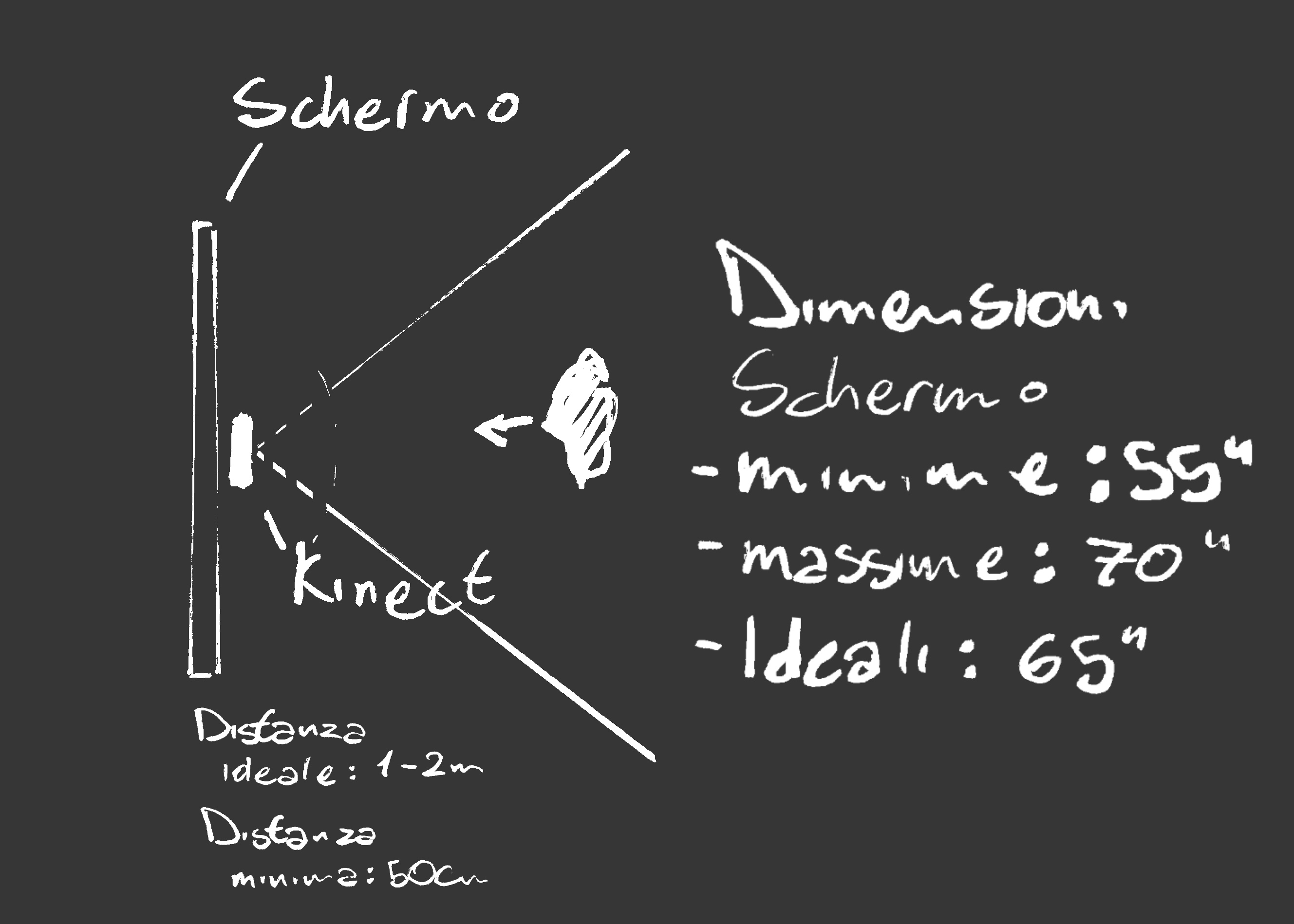
The project is developed with Touchdesigner and uses a Kinect v2 for motion detection and silhouette extraction.
Concept
A seguito della pubblicazione dei documenti relativi al caso Epstein da parte del Dipartimento della Giustizia americano, il mondo intero è stato colto da un'ondata di sconcerto e incredulità. Questo progetto si propone di mettere a fuoco il tema dei documenti redatti e censurati in modo apparentemente casuale.
Mantenendo l'estetica ma invertendo la dinamica della censura attuata dal Dipartimento della Giustizia americano, A Closer Look invita lo spettatore a svelare porzioni di immagini provenienti dagli archivi Epstein attraverso un'interazione sviluppata con una telecamera che riprende il visitatore stesso.
Struttura
Uno schermo mostra un'immagine completamente nera. Non appena una persona si avvicina, viene ripresa da una telecamera e la sua silhouette si sovrappone all'immagine nera, rivelando porzioni di una serie infinita di immagini del database Epstein che si alternano casualmente in rapida successione.
Per scelta estetica e per aggiungere un elemento di veridicità, le immagini sono accompagnate da una didascalia che indica il nome originale del file.
La parte visiva è accompagnata da una colonna sonora composta da estratti audio e testimonianze provenienti direttamente dal database del caso Epstein.
Tecnologia
Il progetto è sviluppato in TouchDesigner e utilizza un sensore Kinect v2 per il tracciamento del movimento e l'estrazione della silhouette.
Gallery
Galleria
.png)
.png)